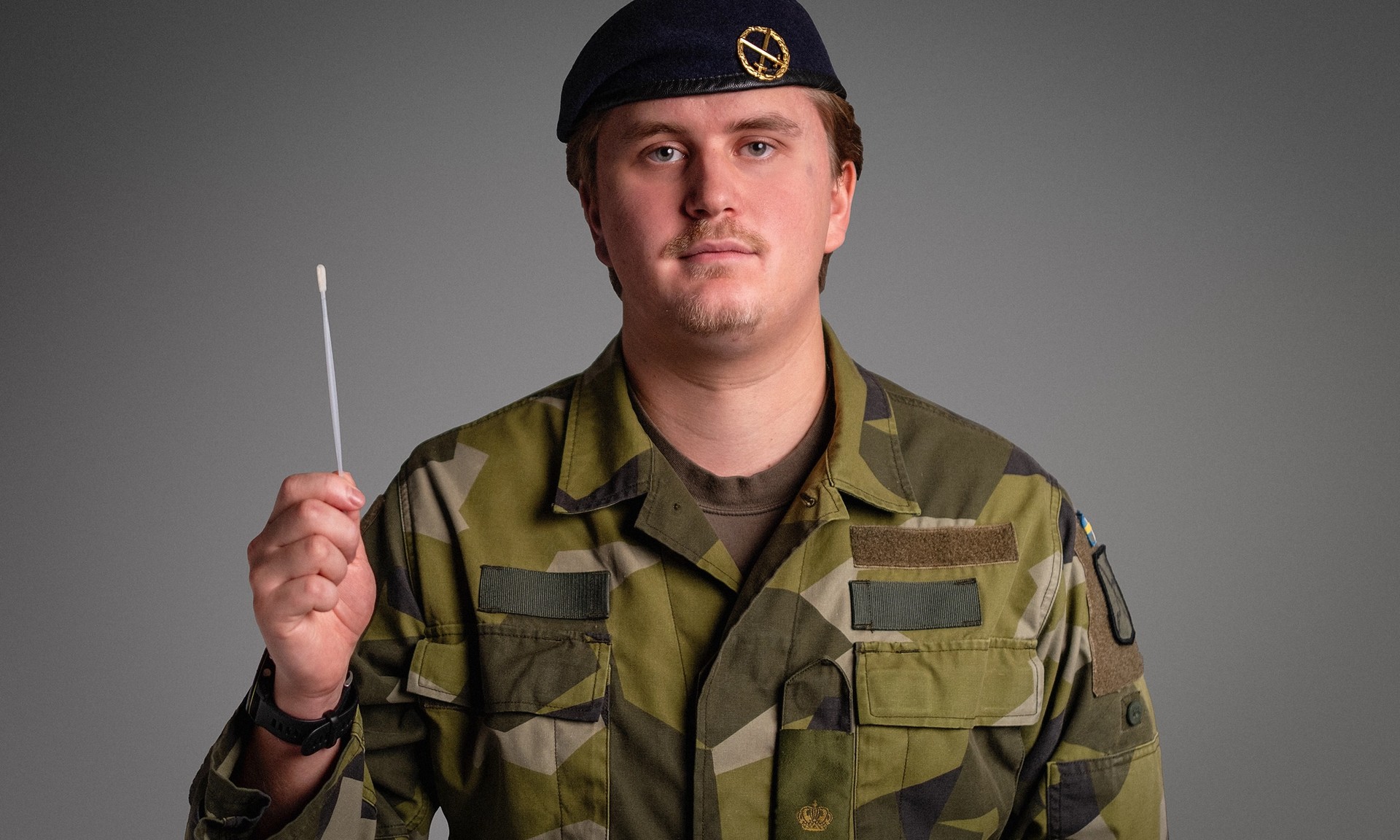
Stem cell donors strengthen Swedens preparedness
A fundamental prerequisite for society’s resilience in times of crisis and war is a functioning health care system that can save lives even under difficult conditions. In this context, access to voluntary stem cell donors plays an important role.
When more people join, it not only improves the ability to treat patients with blood cancer and other serious illnesses in everyday situations – it is also a concrete reinforcement of civil preparedness.
“Many young people, for example conscripts, have already made the decision to contribute to society. Joining the Tobias Registry is an easy way to continue helping others – and it saves lives,” says Patrik Nimberger Hansson, staff physician OPL and head of the Swedish Armed Forces’ blood services.
Civil preparedness is part of the total defence
Civil defense includes, among other things, health and medical care, rescue services, and supply systems. In a state of heightened alert or war, healthcare must be able to continue providing advanced treatment despite strain, staff shortages, or disruptions in logistics. Access to matching stem cell donors is then crucial in order to carry out life-saving transplants.
More registered donors mean shorter search times and a greater likelihood of quickly finding a suitable match. This makes the system more robust and reduces vulnerability in high-pressure situations.
Reduced vulnerability to international disruptions
Sweden is currently heavily dependent on international registries to find stem cell donors. In a tense security policy situation, transport, communications, and international cooperation may be affected. In times of crisis or conflict, access to donors abroad may become limited or delayed.
Sweden cooperates with international registries to find matching donors. If there are disruptions in transport, logistics, or international cooperation, access can quickly become limited. A larger Swedish stem cell registry reduces vulnerability and increases the chances of finding matching donors for patients.
A resource also for radiation injuries
In cases of severe radiation injury, for example after a nuclear power plant accident or a radiological attack, the bone marrow can be damaged. In such situations, a stem cell transplant may be the only life-saving treatment – but only if a matching donor is available in time.